Narrated with AI · Script by Jay William
Narrated with AI

Jay William
Founder | Villa Marketers
25 Years in Hospitality, Direct Bookings, and Vacation Rental Marketing
Direct Bookings • SEO • AI Tools • Branding • Advertising • Owner Acquisition • Growth Systems
- Last Updated
- June 2026
- Reading Time
- 7 min read
- Reviewed for Accuracy
- June 2026
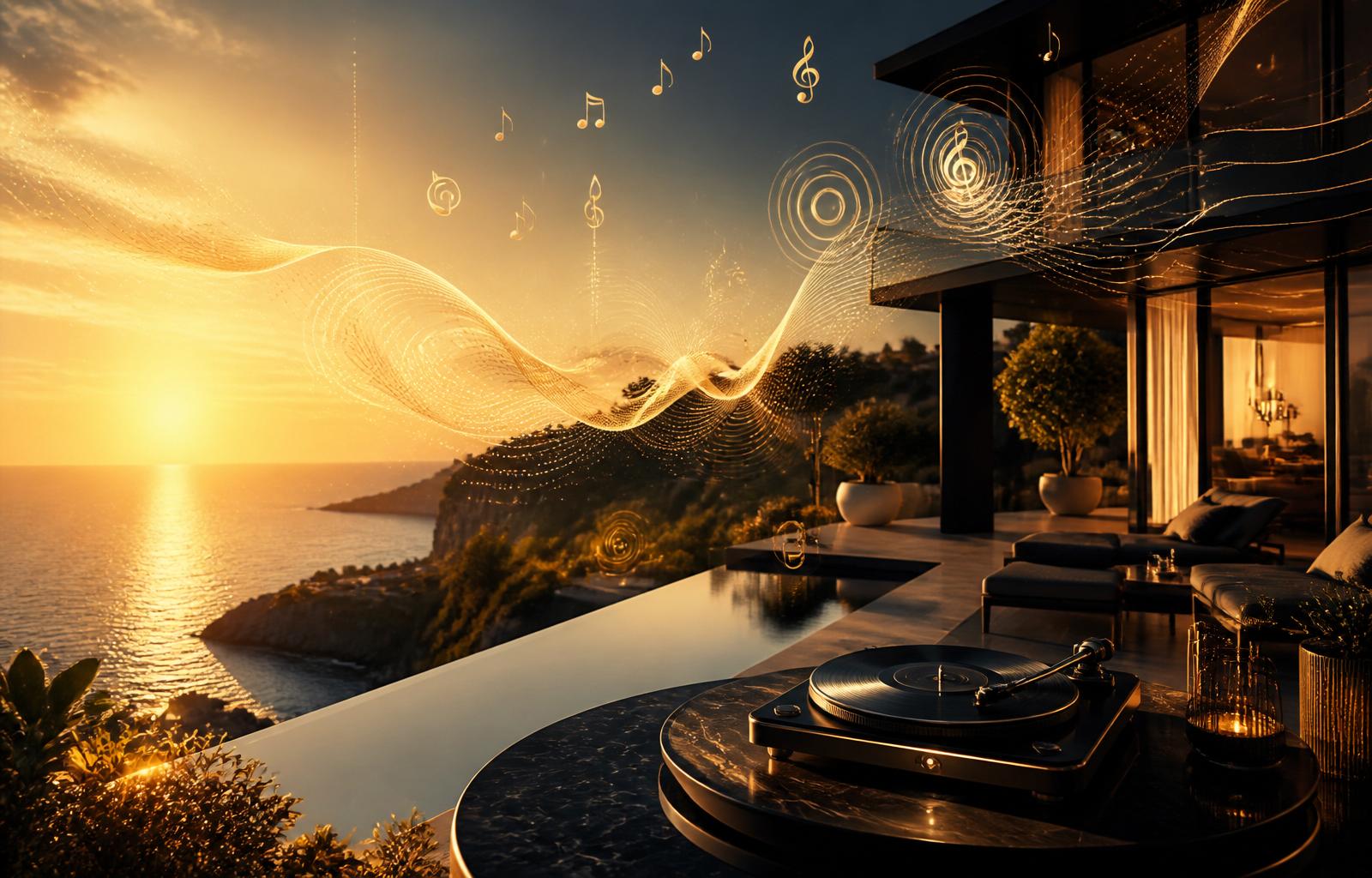
Sonic branding is the deliberate use of music, melody, or sound to reinforce what your brand stands for, the same principle behind a jingle you can't get out of your head. In vacation rental marketing, the right music in a property video does real psychological work: it triggers emotion faster than visuals alone, can improve brand recall, and gives travelers a preview of the experience before they ever book. Used carelessly, it can also get your video muted or taken down, so there's a right way to do this.
In sales, there's a basic truth: to sell well, you have to transfer a feeling. A traveler isn't booking a property, they're booking how they imagine it will feel to be there. Music is one of the fastest, most reliable ways to create that feeling before a single photo even loads.
This corner of vacation rental marketing gets almost no attention. Most of what gets written about video and content marketing in this industry focuses on photography, copy, and listing structure. Almost none of it touches the soundtrack, even though the research on music's effect on emotion and memory is substantial and has been for decades.
The Marketing Magic of Music
Music changes brain activity in measurable ways. Hear a few seconds of a song that means something to you and you can feel a real shift, a lift in mood, a flash of memory, a jolt of energy. That's not a metaphor, it's a documented neurological response.
Researchers at McGill University have shown that music capable of producing “chills” triggers a real dopamine release, along with measurable changes in heart rate, breathing, and skin conductance. Music doesn't just create an emotional impression, it produces a physical one.
That's exactly why it belongs in your marketing, not as background noise, but as a deliberate tool.
Source: McGill University — “Musical chills: why they give us thrills”
Music doesn't just create an emotional impression, it produces a physical one.
Choose the Music for the Feeling You Want, Not for Your Own Taste
Music can just as easily create the wrong feeling as the right one. Older research on music in advertising found that when music fails to move people, it's often because the music didn't actually fit the message, not because music itself doesn't work.
The practical takeaway: choose music based on the emotional experience you want a traveler to have, not based on what you personally like. Run it by a few other people before you publish anything. What feels right to you alone is a sample size of one.
The Pre-Experience Vacation
When we build property videos for clients, we match the music to the destination, not just the property. A New Orleans rental might call for jazz. A Hawaii property might use something built around a ukulele. The goal is to give a traveler an honest preview of the place, a sample of the experience before they've booked it.
People travel partly to experience a different culture. Giving them a taste of that culture in your marketing isn't a gimmick, it's delivering exactly what they're already looking for.
Sonic Branding: When Music Becomes Part of Your Brand
Sonic branding is the use of a melody, sound, or jingle to reinforce a brand's message specifically, the kind of thing you find yourself humming without meaning to. Some of the most recognizable examples are decades old and still instantly identifiable: Nationwide's “Nationwide is on your side,” McDonald's “I'm lovin' it,” and Stanley Steemer's jingle built around their own phone number.
You don't need a national ad budget to use the same principle. A consistent, recognizable sound or musical style across your videos and content can do real work for brand recall, even at the scale of a single property or a small portfolio.
This is genuinely more accessible in 2026 than it's ever been. Commissioning an original jingle or signature theme used to mean hiring a composer, real money most individual owners and small portfolios never had reason to spend. AI music generation tools have changed that math. You can now describe the feeling you want, your property's vibe, the destination, the kind of guest you attract, and generate original musical ideas to build an actual signature sound around, the same concept behind a national jingle, but within reach of a single host instead of requiring a national ad budget.
A consistent, recognizable sound can do real work for brand recall, even at the scale of a single property.
What Music Actually Sticks With People?
There's no single “right genre,” because it depends on your brand and your audience. But research published in the APA journal Psychology of Aesthetics, Creativity, and the Arts on so-called “earworms” found that the music most likely to stick in someone's memory tends to have a faster tempo and a simple, repeatable melody with one or two distinctive features. Catchy isn't an accident, it's a pattern.
Source: Jakubowski et al., “Dissecting an Earworm,” Psychology of Aesthetics, Creativity, and the Arts (APA)
A Real Warning About Using Popular Songs
Using a famous song in your property video feels like an easy win. It isn't. Platforms like YouTube use audio recognition to detect copyrighted music automatically, and a flagged video can get muted or taken down entirely, sometimes after it's already gathered real views. That's a frustrating way to lose a video you put real work into.
Stick to royalty-free music. If sourcing the right royalty-free track for a specific mood feels like a chore, AI-assisted music generation tools can help you create mood-matched, even fully original, tracks quickly. Just confirm the commercial-use license before you publish anything, download and save the license terms, and keep that documentation with the video project. Licensing terms vary by platform, and “AI-generated” doesn't automatically mean “cleared for commercial use.”
“AI-generated” doesn't automatically mean “cleared for commercial use.”
Don't Let Music Scare People Off Your Website
There's one place music can actively hurt you: a website that starts playing audio automatically the moment someone opens it. Plenty of vacation searches happen quietly at a desk during a work day, and a website that suddenly blasts steel drum music is the fastest way to get an immediate, panicked tab close.
This is one piece of advice that's actually gotten more validated over time, not less: most browsers now restrict autoplay audio by default unless a video is muted or the visitor has already engaged with your site. The platforms themselves have effectively enforced the rule. Let people choose to click play. Music people opt into gets heard. Music that ambushes them gets silenced, by their browser or by their own quick reflexes.
FAQ
What is sonic branding?
Sonic branding is the deliberate use of music, melody, or sound to reinforce a brand's identity and message, the same principle behind a memorable jingle or a recurring musical style across a brand's content.
Does music actually affect whether someone books a vacation rental?
It affects the emotional experience of watching your marketing, which influences brand recall and how appealing a property feels before someone has seen it in person. It's one input among many, not a substitute for good photography, accurate listings, or a smooth booking process.
Can I use a popular song in my property video?
Not safely. Platforms can detect copyrighted audio automatically, and the video can be muted or removed, sometimes after it's already gained views. Use royalty-free music instead.
Should music play automatically when someone visits my website?
No. Autoplay audio is one of the fastest ways to drive someone off your site immediately, and most modern browsers block it by default anyway. Let visitors choose to play it.
Do I need a big budget to use sonic branding?
No. The core idea, a consistent, deliberately chosen musical feel across your videos and content, works at the scale of a single property just as well as it works for a national brand. Consistency matters more than budget.
Can I create my own custom sonic brand instead of just using stock music?
Yes, and it's far more realistic now than it used to be. AI music generation tools let you describe the feeling or destination you're going for and generate original musical ideas to build a signature sound around, something that used to require hiring a composer. Just confirm the commercial-use license on whatever you generate before publishing it.
Want your next property video to actually feel like the destination, not just show it?
If you'd like help getting the music right, or putting any of this into practice, reach out and we'll talk through it.
Part of one connected body of work
These flagship guides build on each other. Each one is part of the same direct-booking system.
Jay William
Founder, Villa Marketers · Co-Founder, Knokx
Jay William is the founder of Villa Marketers and co-founder of Knokx, with 20+ years helping vacation rental brands grow beyond OTA dependence. His work focuses on direct-booking strategy, SEO and AI visibility, brand positioning, and owned demand systems for hosts and property managers.
Industry peers call him The Father of Vacation Rental Marketing.
- Direct Booking Strategy
- SEO & AI Visibility
- Brand Positioning
- Property Manager Marketing
- Owner Acquisition