Narrated with AI · Script by Jay William
Narrated with AI

Jay William
Founder | Villa Marketers
25 Years in Hospitality, Direct Bookings, and Vacation Rental Marketing
Direct Bookings • SEO • AI Tools • Branding • Advertising • Owner Acquisition • Growth Systems
- Last Updated
- June 2026
- Reading Time
- 14 min read
- Reviewed for Accuracy
- June 2026
There's a pattern that shows up in vacation rental listings constantly. Everything else is right, the location is ideal, the price is competitive, the reviews are decent, and the bedroom looks exactly like the spare room of someone who furnished it quickly and hasn't thought about it since.
The bed skirt is ironed within an inch of its life. The art above the headboard matches the throw pillows which match the bedside lamps which all came from the same store on the same afternoon. The ceiling fan looms overhead like an industrial fixture in a warehouse. And the whole thing is very, very fine.
Fine doesn't book. Fine gets a three-star cleanliness rating from a guest who can't quite say why they were disappointed but definitely was.
The “Motel vs. Memorable” test
Before touching anything in a bedroom, run this test. Open your listing photos and look at the bedroom shot. Ask yourself one question: when you look at this room, do you feel something, or do you just see something?
A room that makes you feel something — relaxed, excited, pampered, intrigued — tends to book. A room you just see and acknowledge is clean and adequate often doesn't. People tend to react to the emotional feel of a space before they consciously analyze the furniture. A guest scrolling through fifty listings on a Tuesday night is operating largely on first impressions, and first impressions are largely about feeling.
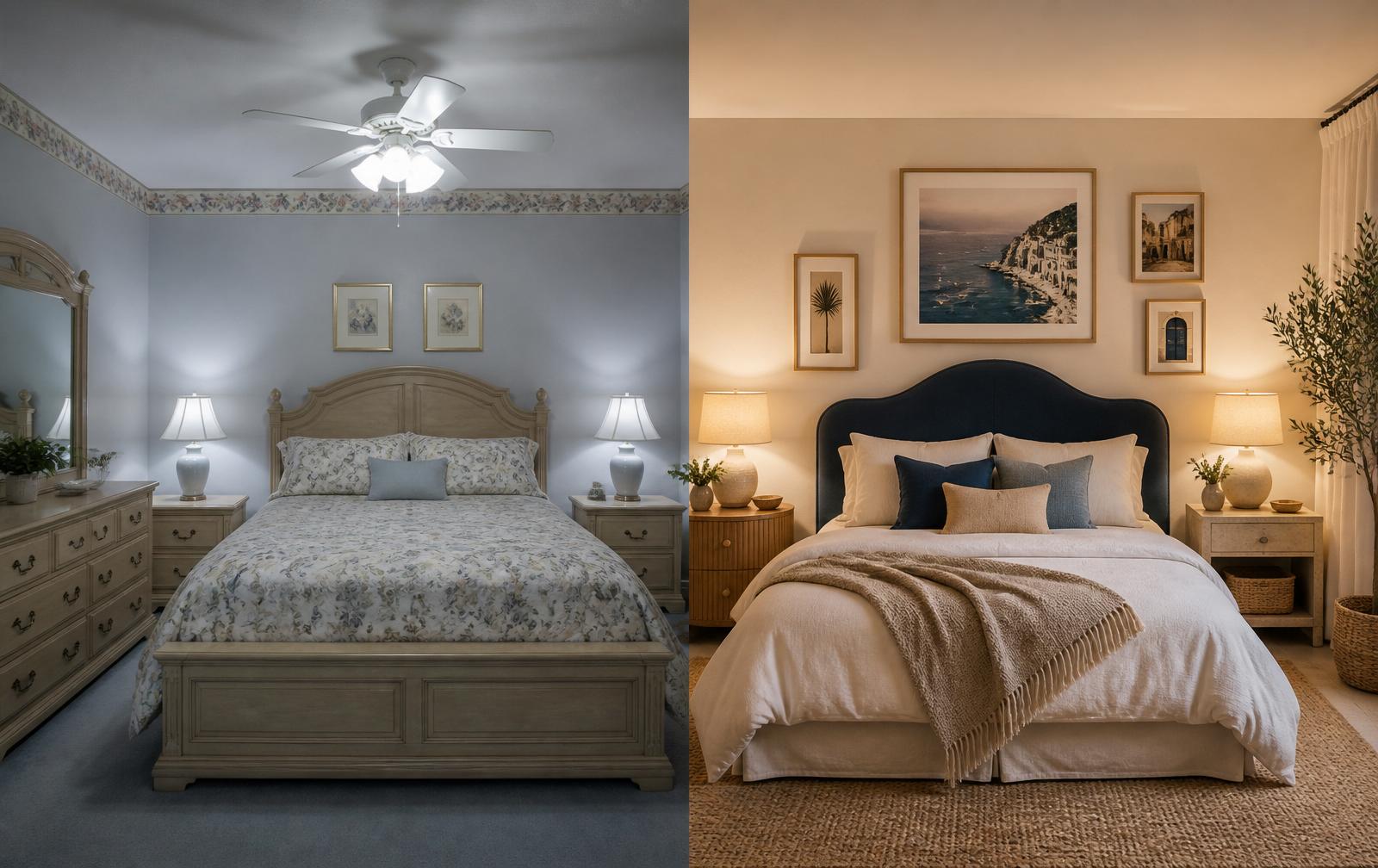 Just fineBooked out
Problem 1: the “granny bed”
The matching bedspread-and-everything-coordinates setup is the single most common mistake in vacation rental bedrooms. It comes from a natural impulse: you go to a furniture store, find a collection you like, and buy the whole set — headboard, nightstands, dresser, lamps, bedding, all perfectly coordinated, all from the same showroom floor.
The result looks like a showroom floor.
Bedroom design is shifting away from uniformity and symmetry, with designers now favoring a layered approach where pieces feel carefully chosen rather than bought all at once. “Bedrooms feel far more elevated when they're designed with a collected approach,” notes interior designer Kailee Blalock. “At minimum, mix your nightstands and dresser rather than purchasing a full matching set.”
What works: buy the bed separately from everything else. Get nightstands that coordinate in color family or material but aren't an exact match. A weighty bed in a sea of lightness feels like a solid ship you can retreat to; a weighty bed in a room full of weighty everything feels more like being stuck in a bog. Mismatched deliberate pieces read as “someone with taste lives here.” Matched sets read as “someone who needed to furnish quickly was here.”
This is exactly where brand becomes a feeling — the bedroom is where expectation meets experience.
The bedding formula that photographs every time
White sheets are still close to a universal safe answer in vacation rental bedrooms — not because trends say so, but because white tends to read as clean and fresh on camera in a way that prints, patterns, and colors often don't. A guest glancing at a listing photo usually isn't registering thread count, but the brightness and crispness of white tends to come through quickly.
The 2026 update: white doesn't have to mean all-white, and it shouldn't mean sterile. The formula that works consistently is layering. Natural materials photograph better than synthetics — linen in particular looks better slightly imperfect, which is a genuine operational advantage. Cotton and linen in warmer, lighter tones — ivory, sand, warm white — feel more like vacation and less like an Airbnb.
White or ivory fitted sheet
Never patterned
Flat sheet or duvet base
Natural material, linen preferred
Duvet cover
Texture, not pattern — the cloud layer
Throw at the foot
Contrast color, draped not folded
Decorative pillows
2 max — coordinate, don't match
The last layer — the throw — should look placed with intention but not staged. A bed that's been made but looks like someone could climb in immediately.
Clean, consistent bedding is also where cleanliness perception begins — more on that in the vacation rental housekeeping guide.
Problem 2: the looming ceiling fan
The ceiling fan above a bed tends to bother guests more than hosts realize. At night, with the room dim, a fan with a central light fixture can become the dominant visual — and the dominant felt experience — in the entire room. Exposed bulbs pointed downward do something worse than look dated: they can feel harsh and unrestful, which is part of why hotel rooms with soft, layered lighting often feel more intimate and expensive than ones lit by a single central fixture.
There are two solutions. Replace the fan with one that has no integrated light fixture — slim, modern, matte, doing its job aerodynamically without becoming a statement. Or pair the fan with proper bedside lamps that provide all the reading and ambient light a guest needs, so they never reach for the harsh overhead.
A central ceiling fan with visible downward bulbs, glaring over the bed. Cold, clinical, and inescapable when you're lying down.
Two warm bedside lamps at reading height, a fan that truly blends or no fixture at all, and a dimmer if possible. Control over warmth is something guests remember.
Problem 3: the generic wall art
Nothing dates a vacation rental bedroom faster than the framed prints from the big-box home store that everyone within a five-mile radius also bought — modest matte frames, pastoral or coastal subject matter that could be from anywhere, spaced individually with careful randomness.
The fix is cheaper and better than the replacement you're imagining. Group photography into sets. Four related photographs — same photographer, same tone, same subject, framed simply in white or black, grouped on one wall — creates a gallery effect that reads as curated and specific. The key word is specific: the art should feel like it belongs to this location, not like it could live in any rental in any city.
The mistake
Single random prints scattered at different heights, none related to the next.
The fix
Four related prints grouped as a square, evenly spaced, in the same simple frame.
The upgrade
One larger destination-specific work as the focal point above the headboard.
Frame simply: thin black or thin white. No gilded frames, no ornate wood, no double matting. Think museum, not gift shop. A set of four destination shots from a local artist can be had for $40–60 complete and will outlast any trend because it's real rather than generic.
The destination bedroom: selling the place, not just the space
Here's the highest-level version of everything above: the goal of vacation rental bedroom design isn't just comfort. It's transportation. A guest at a beach property should feel the ocean before they see it. A mountain cabin bedroom should feel like the woods outside. A downtown loft should feel like the city's energy, ordered and channeled into somewhere to actually sleep.
Every element — the art, the textiles, the palette, the materials — should connect to the location. The bedroom that makes a guest feel “I am in exactly the right place” is the bedroom that generates the five-star review.

Coastal / Beach
- Palette
- Driftwood, ivory, coral accent
- Material
- Natural linen
- Art
- Ocean & shoreline photography
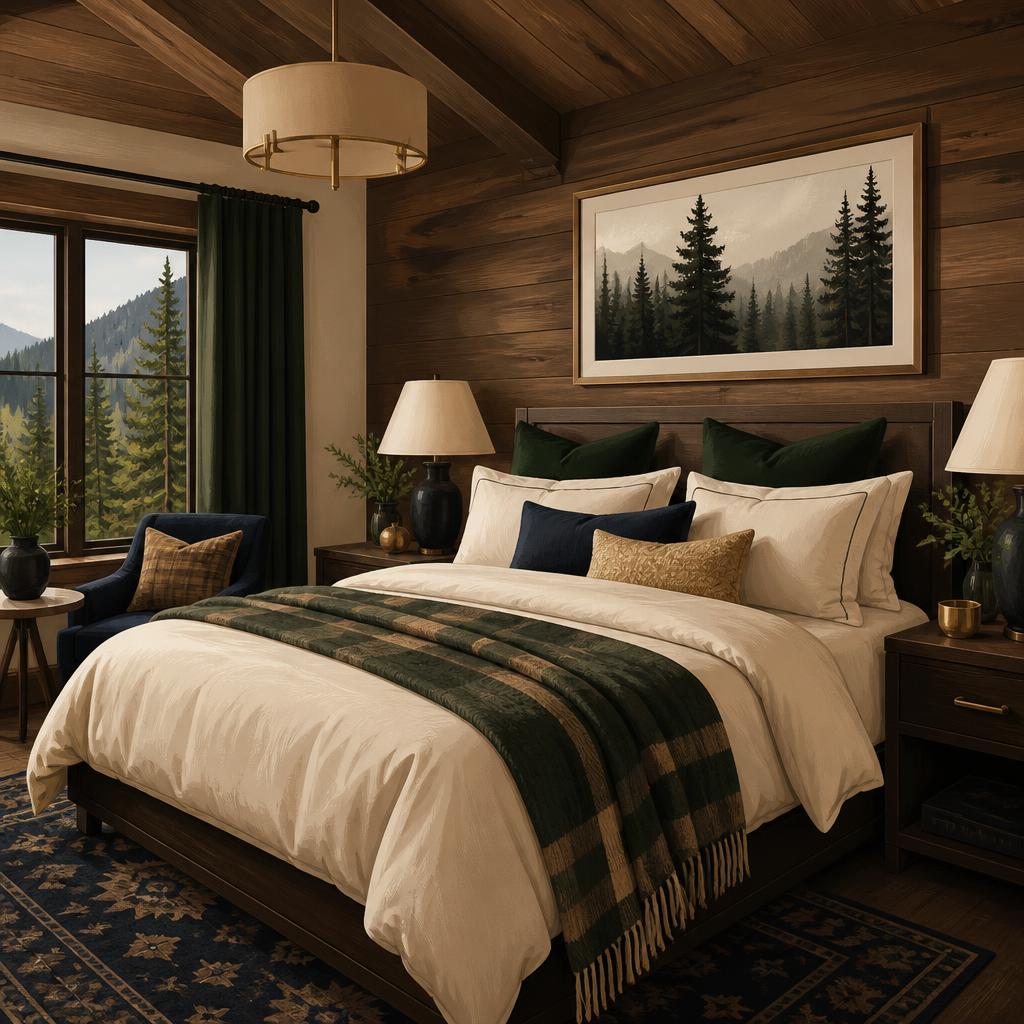
Mountain / Cabin
- Palette
- Warm woods, deep green
- Material
- Wool throw
- Art
- Forest & ridge photography
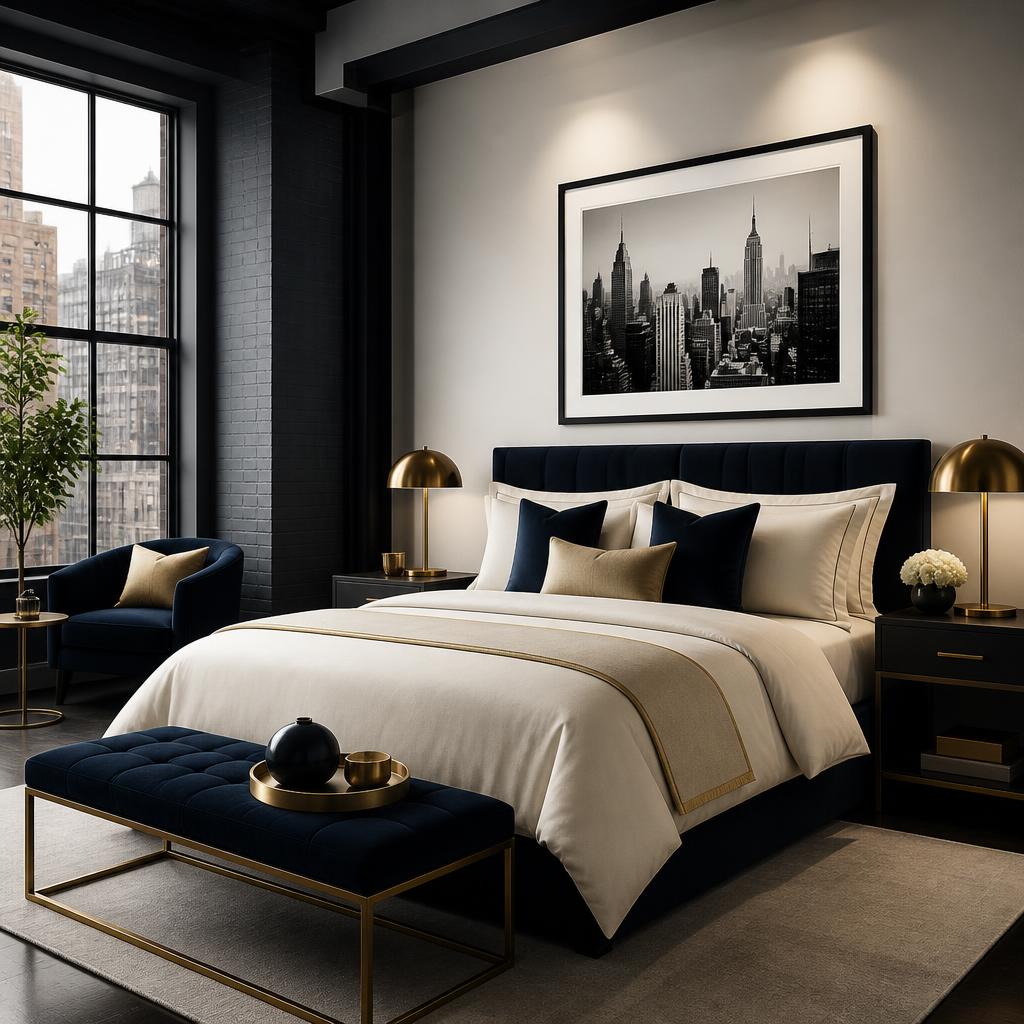
Urban / Loft
- Palette
- Monochrome, navy accent
- Material
- Clean geometric lines
- Art
- City & skyline photography
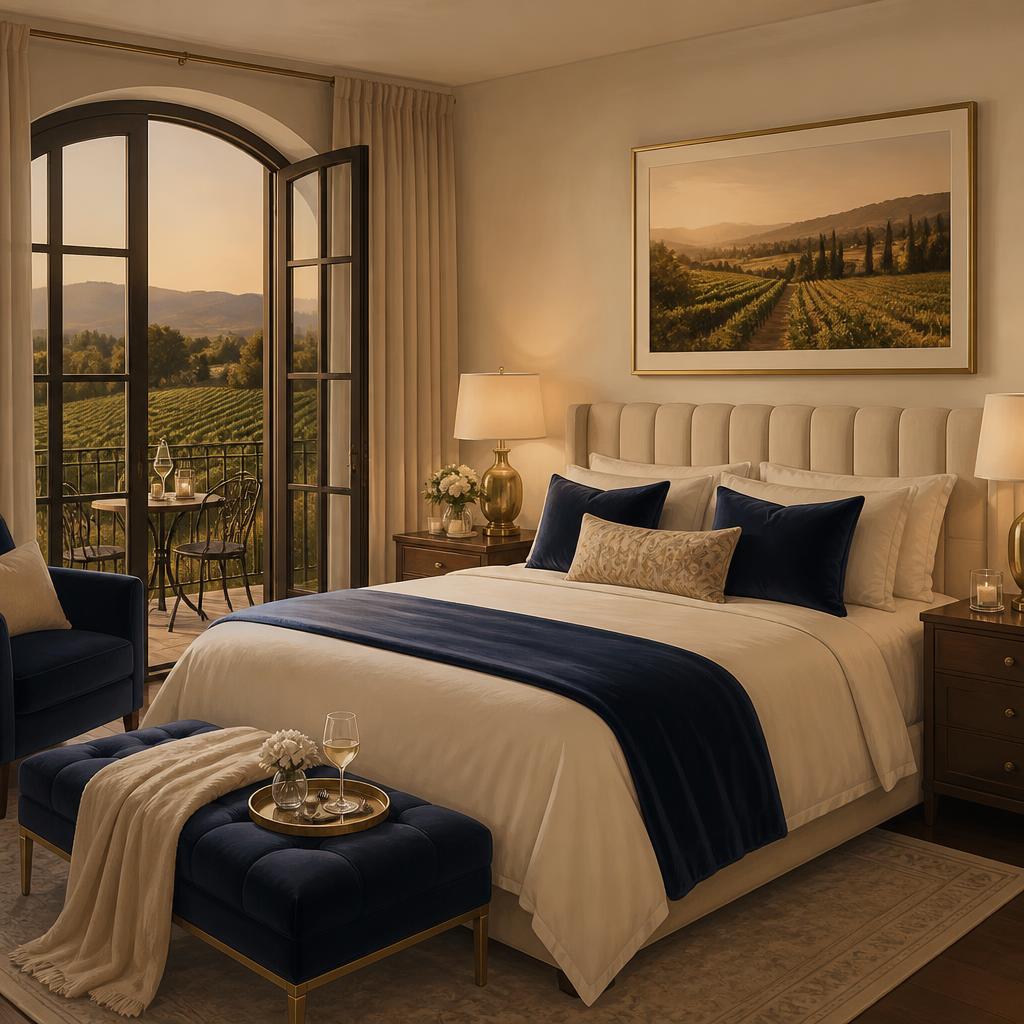
Wine Country / Romance
- Palette
- Warm ivory, champagne gold
- Material
- Velvet
- Art
- Vineyard photography
The cheapest version of this: swap the generic prints for destination-specific photography, and replace the synthetic bedding with natural materials that match the environment. Under $200 total, and the difference in how the room photographs and feels is immediate.
The photograph is the first product
Every design decision above has a dual purpose: it has to work in person, and it has to work on camera. The first three photos determine whether a guest clicks or scrolls past. Stage the bedroom for photography before furnishing decisions, not after. The camera sees texture better than it sees color, and natural light dramatically outperforms any artificial lighting for listing photography.
Angle matters as much as the room. A bedroom shot from the doorway at eye level looks smaller and less inviting than the same room shot from the corner at about three feet off the floor, looking toward the window.
The Lived-In Luxury Principle
The most inviting bed doesn't look slept in — but it also shouldn't look untouched. Duvet pulled back slightly, throw angled naturally, and a book or magazine on the nightstand can suggest someone has already been living well in the room. That quiet signal of a life worth stepping into is more compelling than a bed made with hospital corners, and it's the same reason furniture showrooms never stage a perfectly flat bed.
The room is also the first thing a guest uses to form their story about the stay — which is why attracting the right guest and delivering on the room's promise go hand in hand. When you're ready to make it a repeatable standard across a property or portfolio, our vacation rental marketing services cover staging, photography direction, and brand standards end to end.
The quick-win checklist: what to change first
If you're looking at your current bedroom and feeling the gap between where it is and where it should be, here's the priority order for maximum impact with minimum spend. Bedroom upgrades also lift the two things guests judge you on later — the amenity story you can honestly tell in your amenities lineup and the sleep-quality note that keeps showing up in your reviews. The same standard shows up operationally in housekeeping .
The Quick Win Priority Card
Do This Week
Highest impact, lowest cost
- Replace the bedding entirely — white or natural linen duvet, white sheets, a throw.
- Group the art — buy one more print, hang all of them together on one wall, take everything else down.
- Remove or replace the ceiling-fan light fixture, or add proper bedside lamps so you never need it.
Do This Month
Medium impact, moderate cost
- Swap one matching piece — replace a nightstand with something that coordinates but doesn't match.
- Add a destination-specific art piece above the headboard.
- Add a throw in a different material than the duvet — texture contrast photographs beautifully.
Do This Year
Longer term
- Replace the headboard with a statement piece — it upgrades the whole room.
- Repaint in a tone that connects to the destination environment.
- Commission a local photographer for destination-specific prints.
Save this card — the bedding-and-art combination in week one is the highest-impact, lowest-cost upgrade you can make.
Frequently asked questions
Why does bedroom design have such an outsized impact on vacation rental bookings?
Because the bedroom is where guests are most vulnerable, most private, and where the experience of the stay is felt most directly. It's also one of the first photos guests look at in a listing, and it shapes their emotional sense of the whole property before they've booked. A room that photographs well and feels right on arrival delivers on the promise. A room that falls short of its own listing photos doesn't.
Is white bedding still the right choice in 2026?
White and natural-tone bedding in quality materials tends to photograph more crisply and often reads as cleaner and more premium than busier alternatives. Recent design trends have moved toward more color and texture in bedding, but for vacation rentals specifically — where the listing photo does much of the selling — white or warm ivory with texture and a contrasting throw is a reliable, low-risk default that many hosts find performs well.
How important is the ceiling fan situation really?
More important than most hosts think, especially at night. A ceiling fan with a central, downward-facing light fixture can become the dominant visual element of a dark bedroom, and harsh overhead light often feels less comfortable than soft, layered lighting. Replace the fixture or add bedside lighting that makes the overhead light unnecessary, and the room tends to feel more intimate and comfortable.
Should every bedroom in a multi-property portfolio look the same?
No. Each property should have a bedroom that reflects its specific destination and its ideal guest. Consistency within a property matters — every room should feel like it belongs to the same brand. But a beach property and a mountain cabin and a downtown apartment should have genuinely different bedroom aesthetics, because they're making genuinely different promises to genuinely different guests.
How much should I expect to spend to meaningfully upgrade a bedroom?
You can make a significant, photographable, review-generating difference for under $300 in most cases: new duvet and cover, a throw, a set of four art prints and simple frames, and new bulbs in the bedside lamps. The ceiling fan is more if you're replacing it. The headboard is more if that's the priority. But the bedding-and-art combination is the highest-impact, lowest-cost intervention available.
Part of one connected body of work
These flagship guides build on each other. Each one is part of the same direct-booking system.
Jay William
Founder, Villa Marketers · Co-Founder, Knokx
Jay William is the founder of Villa Marketers and co-founder of Knokx, with 20+ years helping vacation rental brands grow beyond OTA dependence. His work focuses on direct-booking strategy, SEO and AI visibility, brand positioning, and owned demand systems for hosts and property managers.
Industry peers call him The Father of Vacation Rental Marketing.
- Direct Booking Strategy
- SEO & AI Visibility
- Brand Positioning
- Property Manager Marketing
- Owner Acquisition
Design Bedrooms That Book at Premium Rates
We help hosts and property managers build the visual identity, bedroom standards, and listing presentation that turns a scrolling traveler into a booking — from staging and photography direction to the brand standards that keep every room on-brand.