

Jay William
Founder | Villa Marketers
25+ Years in Hospitality · Vacation Rental Marketing Since 2005
Direct Bookings • SEO • AI Tools • Branding • Advertising • Owner Acquisition • Growth Systems
- Last Updated
- 2026
- Reading Time
- 11 min read
- Reviewed for Accuracy
- 2026
People book on emotion and justify with facts. A list of amenities gets processed; a story gets felt — and an unfinished one pulls the reader toward closure. Find your property’s story, tell your location’s story, and carry the same narrative across your photos, listing, and follow-up. That’s what turns a browser into a booking.
The property with the best story wins — not the one with the most amenities. Amenities are the price of admission. Story is the reason someone books yours instead of the next one on the page.
In 1968, they found him dead at his campsite.
The man who wrestled gators with his bare hands. Who built a zoo deep in the Florida jungle. Who had Hollywood stars driving out to the middle of nowhere just to watch him perform.
The sheriff ruled it suicide. The locals have whispered murder for over fifty years. Nobody knows the truth.
And nobody — not one property manager in that area — was telling the story.
So I did. For a vacation rental.
People didn’t just read it. They booked.
That’s the thing an amenity list will never do. In a sea of look-alike listings, the property with the best story wins — not the one with the most bedrooms or the newest hot tub. Story is what creates the emotional pull, and the curiosity, that turn a browser into a booking. Here’s how to find your property’s story, tell your location’s, and carry it across everything — from your photos to your listing to the note you leave on the counter.
The property with the best story wins. Amenities are the price of admission — story is the reason they book yours.
1. Why story sells
People book on emotion and justify with facts. A list of amenities gets processed; a story gets felt — it lights up the parts of the brain tied to emotion and decision-making. That’s why the same property, described two different ways, converts at completely different rates.
An unfinished story is even more powerful. When a story raises a question it doesn’t immediately answer, the brain leans in for closure. That pull — curiosity — is what moves someone from browsing to booking. It’s the same instinct behind every good movie trailer, every open loop, and every headline that made you click when you didn’t plan to.
There's a famous experiment that put a hard number on this. In 2009, journalists Rob Walker and Joshua Glenn ran a project called Significant Objects: they bought ordinary thrift-store trinkets — averaging about $1.25 apiece — paired each one with a short story written by a real author, and resold them on eBay. The catch: the stories were openly labeled as fiction. No trickery. Those roughly-a-dollar objects sold for nearly $8,000 in total. Same junk. The only thing added was a story.
That's the whole thesis in one experiment — narrative doesn't just describe value, it creates it. Now scale it from a $1 mug to a property that rents for thousands a week. The gap between a listing that sits and one that books is rarely the amenities. It's whether there's a story attached. (One honest footnote the experiment hands us: their stories were fiction by design. Yours can't be — on a real rental the story has to be true. You're amplifying what's already there, not inventing it. More on that in the last section.)
2. Find your property’s story
Every property has one, waiting to be pulled forward: its history, its architecture, the owner’s reason for buying it, a signature feature guests rave about, the land around it. You’re not inventing a story — you’re excavating the one that’s already there.
A simple prompt to unlock it: if your property were a person, who would it be? A bayfront condo might be “a peaceful escape where mornings start with coffee on the balcony and dolphins rolling through the waves.” A historic beach house might be “a vintage retreat that’s hosted generations of beach lovers, steps from the boardwalk.” That personality is your brand. Once you can say who your property is, every photo, caption, and line of copy gets easier to write — because you know the voice they all have to share. (Deeper on that in how to create a vacation rental brand.)
3. The two kinds of stories — and who the hero is
There are really only two kinds of stories in this business — and you want both working for you.
First-party stories are the ones you tell: your origin, your why, the property’s own history. They sound like this — “Once upon a time, I bought a place in Mexico City. I fell in love with it — the sunsets that seem to go on forever, a town with a vibe that makes everyone want to call it home — and I opened the doors to share it. That’s how I got into this business.” That’s yours to tell, and it builds the brand.
Third-party stories are the ones your guests tell about you. They’re a different kind of powerful, because a stranger believes another guest long before they believe you: “We loved the hot tub at night. The kids couldn’t get enough of the fire pit — we made s’mores and laughed for hours. Can’t wait to come back.” That’s a story too. It just happens to come from someone with nothing to sell.
So don’t only tell your own story — let your guests tell it for you. Every review is a small story, and stories are assets: collect them, feature them, and put them to work everywhere. (Turning reviews into booking fuel is a craft of its own — see the guide to vacation rental reviews.)
And one rule ties all of it together: the guest is always the hero, never you. You’re not the star — you’re the guide who makes their story possible. Weak listings say “we built an incredible place.” Great ones say “you’ll have the trip you’ll still be talking about a year from now.” Point every story, first-party or third-party, at the guest’s transformation — not your trophy shelf.
4. Tell your location’s story — the goldmine nobody’s mining
Remember the man from the top of this page? That was a location story — and it’s the most underused weapon in vacation rental marketing. Your property’s story is the foundation; your location’s story is the multiplier.
Here’s what actually happened. That property manager runs rentals on the Loxahatchee — a gorgeous, wild stretch of South Florida — with the same amenity list as every competitor and the same “close to the beach, family-friendly” copy as everyone else. Indistinguishable. So instead of selling the house, we told the legend of Trapper Nelson: the gator-wrestling “Tarzan of the Loxahatchee,” his jungle zoo, his Hollywood visitors, and the 1968 death the sheriff called suicide and the locals still call something else.
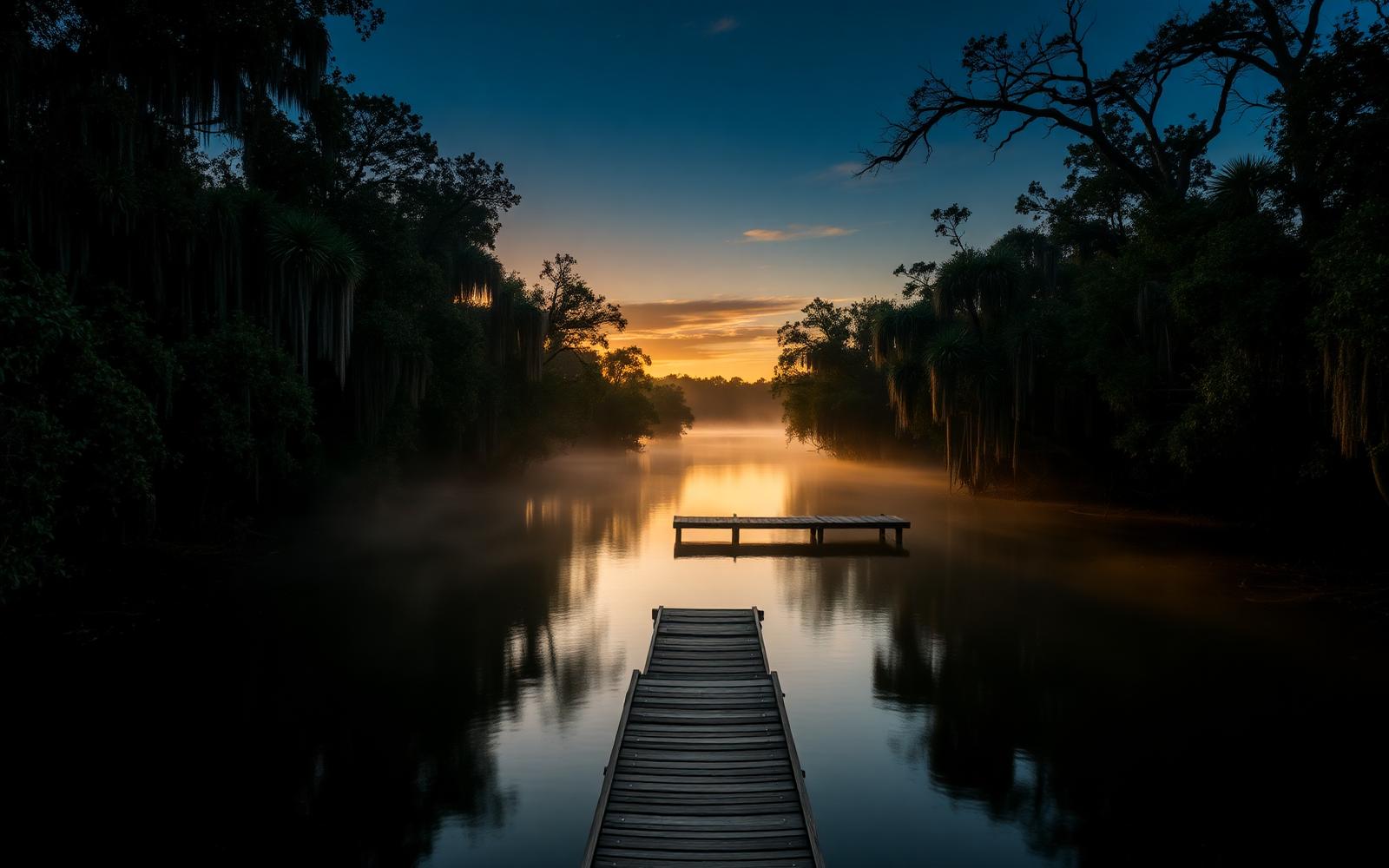
People downloaded it out of pure curiosity — who was this guy, what really happened? They finished it feeling smarter — real history, real mystery, insider knowledge. They felt connected to the wild side of Florida most visitors never see. And then they wanted to experience it — “can we kayak his river? visit his camp?” That’s when they booked. It even opened partnerships: local operators now run a “Trapper Nelson experience.”
The lesson: they didn’t book for amenities. They booked for the myth. Every location has a Trapper Nelson — a legend, a mystery, a piece of history nobody’s told. Find yours and tell it — the way we did on Singer Island for Blue Water Cove Resort, where Peanut Island and the Blue Heron Bridge shore-dive corridor became the reason to book. It works because it triggers curiosity, leaves a question the reader needs closed, teaches instead of sells, and makes people want to live the story — not just rent a room. That’s the pattern I’ve watched hold for twenty-five years: nothing outperforms a true story nobody else bothered to tell.
And it’s worth naming a second-order benefit: this kind of unique, local, hand-told content is exactly what search engines and AI answer engines love to surface — because nobody else has it. Story is the moat, and it happens to be great SEO fuel too.
5. Let your photos tell the story
Here’s something I’ve learned the hard way over two decades of doing this: every photo on your listing is already telling a story. The only question is whether it’s the one you meant to tell.
A dark, cluttered, flash-lit phone shot tells a story too — of an owner who stopped caring. A place that was probably beautiful once and is now… fine. A tired duvet, dated fixtures, not one seasonal update in three years. Guests read all of that in about a second and a half, and it caps your nightly rate before they’ve read a word of your copy. Your photos are the first handshake — make them tell the right story.
So shoot deliberately, and if you can at all afford it, hire a professional. Lighting, angle, composition, and real editing are the difference between “nice” and “irresistible” — it’s one of the highest-ROI dollars you’ll spend on the whole property. Same house, same amenities, twice the perceived value.
But don’t stop at clean, well-lit rooms — shoot moments. An empty living room is a floor plan. Two coffee cups and an open book on the deck rail is a slow morning. A bottle of wine and two glasses on the balcony at dusk is a date night. A laptop open on a sunlit desk is the remote worker already picturing a month here. Kids mid-cannonball in the pool is a family’s entire summer. Every staged detail hands the guest a life to step into — it’s you-language, told in pictures.
No spot that tells a story? Build one. A reading nook in a dead corner — a chair, a lamp, a little side table, a stack of books. A fire-pit circle in an unused patch of yard. You can seed a dozen tiny stories through a single property, and each one gives a photo a reason to exist.
And here’s what’s changed the game: you can stage with AI now. Tools like ChatGPT’s image generation will set a table, drop a coffee cup and a folded newspaper on the counter, or show your place dressed for the season it’s being booked in — styling that used to mean a stylist, a prop kit, and a half-day shoot, done in minutes.
But the rule is the same as everywhere else in this guide, and I’ll say it flat out: it has to be real. Stage the moment, show a season you actually offer, add the touches a guest would actually find when they walk in. Never generate a water view you don’t have, a room that doesn’t exist, or a renovation you haven’t done. The moment the place doesn’t match the pictures, you’ve traded a booking for a refund claim and a review with the word “misleading” in it. AI is a shortcut for showing what’s real, beautifully — not for faking what isn’t. Used honestly, it’s one of the biggest unfair advantages a rental owner has right now.
6. Write it so they see themselves there
The core move in the copy itself is you-language — put the guest inside the scene. “You’ll wake to the smell of the pines and walk ninety-five steps to the water,” not “the property is located near the water.” Specific and sensory beats generic every time. People think in pictures; give them one they can step into.
The full mechanics of title, description, chunking, USPs, and writing so AI can quote you live in the flagship guide — how to write a vacation rental listing that books. Storytelling is the strategy; that guide is where you execute it on the page.
7. Carry the story across every channel
One narrative, everywhere. The listing tells the short version. An immersive About page on your direct-booking site tells the long one. Your photo captions echo it. Social (day-in-the-life glimpses, guest stories shared with permission) keeps it alive between stays. An email welcome series unfolds it before arrival. An in-home welcome book and a handwritten note continue it in person, once they’re on the couch.
Consistency is what makes a story stick. When every touchpoint says the same thing in the same voice, the guest starts to remember you the way they remember a favorite restaurant or hotel — not as “a rental we stayed at,” but by name. That’s the compounding effect of a real vacation rental brand. It’s also what powers a purple-cow advertising campaign when you finally take the story out in paid.
8. Keep it true
Story amplifies what’s real — it never invents. Don’t manufacture features or oversell a view; authenticity builds the trust that earns the booking and the five-star review, and overselling invites refunds and bad reviews instead. I’ve watched more owners wreck a hard-earned five-star reputation with one oversold view than with any other mistake in the book. If your “steps from the water” is actually a ten-minute walk, say ten-minute walk — and find a different thing to make legendary.
And skip the tired clichés. “Hidden gem.” “Breathtaking views.” “Home away from home.” They’re the opposite of a story — they’re what everyone else writes to avoid having to think. The whole point of storytelling is not sounding like everyone else. Say the specific, true, slightly weird thing. That’s the line the right ideal guest will remember.
Find the true story. Tell the location’s. Let the photos carry it. Speak the same voice everywhere. Never invent what isn’t there.
Storytelling is one lever inside a larger system — brand, listing, amenities, price, reviews, guest fit, and direct channel all pull in the same direction. The full map lives in the marketing vacation rentals playbook, the hub this piece belongs under.
FAQ
What is storytelling in vacation rental marketing?
It's marketing your property through narrative — its story, its location's story, and the experience of staying there — instead of a flat list of amenities, so travelers connect emotionally and are pulled to book.
Does storytelling actually increase a property's value?
Evidence says yes. In the 2009 Significant Objects experiment, thrift-store items averaging about $1.25 were paired with short fictional stories and resold on eBay for nearly $8,000 total — a measurable jump in perceived value from nothing but narrative. On a real rental the same effect applies: a true, well-told story lifts what guests will pay and how quickly you book.
How do I find my property's story?
Look at its history, architecture, your reason for buying it, a signature feature guests love, and the surroundings. Ask what personality it would have if it were a person — that's your brand.
What's the difference between a first-party and a third-party story?
First-party stories are the ones you tell — your origin, your why, your property's history. Third-party stories are the ones your guests tell about you, like reviews. Both sell, but guests' stories are believed faster, so collect and feature them — and in every story, make the guest the hero, not yourself.
How do I use local history or legends to market my rental?
Find the legend, mystery, or history near you that nobody's telling, and tell it in a way that sparks curiosity and leaves a question unanswered. People get curious, feel smarter, and want to experience it in person — which is when they book.
Do professional photos really matter for a vacation rental?
Enormously — they're the first handshake and tell your story before any words. A pro's lighting, composition, and editing lift perceived value and bookings; weak photos cap both.
Can I use AI to stage my vacation rental photos?
Yes — to stage what's already real. AI image tools can set a table, add seasonal touches, or capture a moment beautifully in minutes. What you must never do is generate a view, room, or feature the property doesn't have — the moment the photos don't match the stay, you invite refund claims and “misleading” reviews. Use AI to show what's real, not to fake what isn't.
How is storytelling different from just writing a good description?
A good description informs; a story makes the reader feel and creates curiosity. Story is the strategy; the description is one place you execute it.
Jay William — The Father of Vacation Rental Marketing
Jay William is the founder of Villa Marketers (est. 2005). For two decades he’s helped owners and managers turn their property, their location, and their brand into stories travelers actually remember — and book.
Turn your property into the story guests can’t stop retelling.
We’ll pull the true story out of your property and your location, and rebuild the listing, the site, the photos, and the follow-up around it — one narrative, every touchpoint. BOOM.
BOOM.
Part of one connected body of work
These flagship guides build on each other. Each one is part of the same direct-booking system.
Jay William
Founder, Villa Marketers · Co-Founder, Knokx
Jay William is the founder of Villa Marketers and co-founder of Knokx, with 20+ years helping vacation rental brands grow beyond OTA dependence. His work focuses on direct-booking strategy, SEO and AI visibility, brand positioning, and owned demand systems for hosts and property managers.
Industry peers call him The Father of Vacation Rental Marketing.
- Direct Booking Strategy
- SEO & AI Visibility
- Brand Positioning
- Property Manager Marketing
- Owner Acquisition