Vacation Rental Marketing Playbook / Social Media
The 2026 Edition
Social Media Marketing for Vacation Rentals
Twenty-three content strategies, five platforms worth your time, and the honest reason none of it works if you treat social like a billboard.
Key takeaway
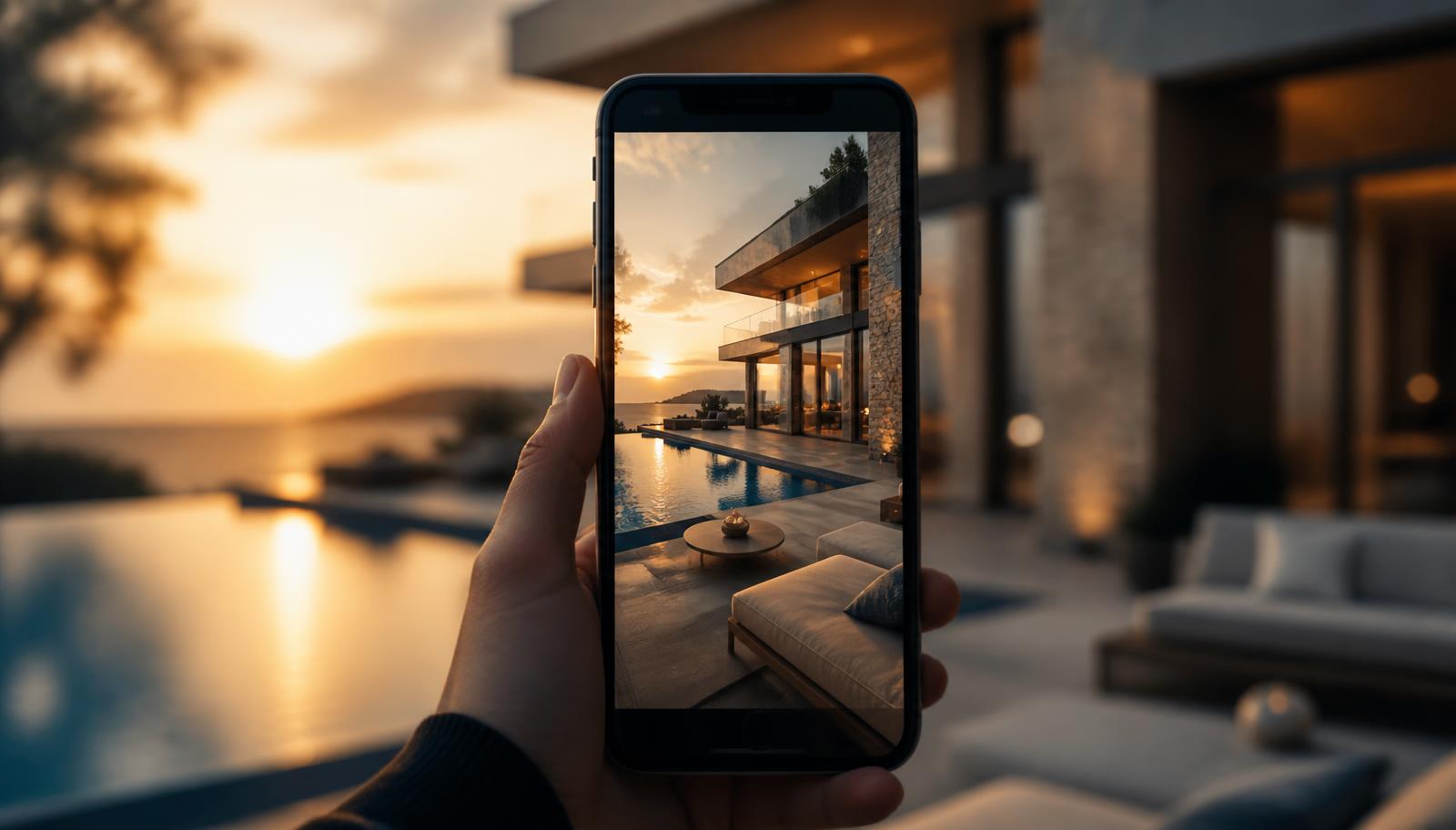
Social media marketing for vacation rentals is the work of building an audience you own, then feeding that audience to your direct-booking engine — not another place to shout "book now." The mechanism is consistency plus genuinely valuable content: roughly 80 to 90 percent of your posts should be worth something to the viewer, and only 10 to 20 percent should ask for the sale. You do not need to go viral. You need the right few thousand people to see you enough times that they search your brand name instead of an OTA.
I wrote a book about this called How To Launch Your Social Marketing Like An Astronaut. Twenty-three content strategies, laid out for vacation rental owners who had a Facebook page and no idea what to put on it. Most of it still holds. Some of it aged badly — it had a section on Google+, which no longer exists, and a video section written before vertical video ate the internet.
So this is the rebuild. All twenty-three strategies are here, grouped into a system instead of a list. The dead parts are cut. The parts nobody had to think about back then — short-form vertical video, TikTok as a search engine, AI production, creator partnerships — are added at the end, honestly labeled as what I would add now.
One thing has not changed, and it is the whole point: it is not about you. It is about your audience. Think VAL-YOU. Every post has to be worth something to you — the person scrolling, my audience, my guests — before it is worth anything to the business posting it. That is the entire discipline. Everything below is just execution on that one idea. Call it valueness. It is the only thing that compounds.
What is in here
01Why social media matters for vacation rentals now
Here is the shift you have to accept before anything else works: social media is no longer a place where people read. It is a place where people watch. Video now accounts for over 60 percent of total social media consumption (NewMedia, 2026), and on mobile — which is where your guests are — vertical video makes up roughly 95 percent of video consumption.
That is not a stylistic preference. It is a distribution fact. Short-form video generates about 2.5x more engagement than long-form (Sprout Social). Eighty-five percent of marketers say short-form video is the most effective social content format (Wyzowl / Marketing LTB). HubSpot's 2026 data ranks short-form video the highest-ROI content format, cited by around 49 percent of marketers. And the audience agrees: 81 percent of consumers want to see more short-form video from brands (SellersCommerce), while 73 percent say short-form video is how they prefer to learn about a product (AutoFaceless, 2026). Nobody is arguing about this anymore — 92 percent of marketers plan to maintain or increase video budgets in 2026 (Wyzowl).
For a vacation rental, this is unusually good news. You already own the single most watchable asset in the category: a beautiful place, in a beautiful location, that people fantasize about while they are sitting in traffic. A property manager with a phone can produce more compelling short-form video in one afternoon than a software company can produce in a quarter. Most owners simply never shoot it. They post the same three listing photos and wonder why nothing happens.
The second thing to accept is that social media is not a booking engine. It is an attention engine. Nobody wakes up, opens Instagram and completes a reservation. What happens is slower and more valuable: someone sees your destination three times, follows you, watches you be useful for two months, and then types your brand name into Google when the trip becomes real. Social is where the trust gets built. Your website is where it gets cashed.

The honest caveat
Video-first does not mean viral-first. Reach is not revenue. A clip that gets 400,000 views from people who will never fly to your region is worth less than a clip that gets 900 views from people already planning that trip. Judge social by whether it produced followers, brand searches, list signups and direct bookings — not by view counts.
02The platforms that actually matter in 2026
Before the table, the most valuable sentence in this section: pick one or two platforms and do them properly. Being everywhere is how owners end up posting the same tired photo five times a week in five places and calling it a strategy. Go where your actual guests already are. If you rent a family beach house in a drive-to market, that is probably Instagram plus a couple of Facebook Groups. If you rent a design-forward cabin that photographs like a magazine spread, that is Instagram and TikTok. If your guests plan nine months out around a wedding or a national park trip, Pinterest is genuinely underrated.

| Platform | Dominant format | Best for | Discovery strength | Vacation rental fit |
|---|---|---|---|---|
| Reels, carousels, Stories | Property aesthetics, guest proof, ongoing audience | High — Reels push you beyond followers | Strongest all-round. Reels drive around 22% higher engagement than other Instagram post types (NewMedia, 2026) | |
| TikTok | Short-form vertical video | Destination discovery, personality, reaching new travelers | Highest — and it works as a search engine | Very strong. 32% of users have booked a stay they discovered on TikTok (Influencer Marketing Hub, via Sendible 2026) |
| YouTube Shorts | Short vertical video, plus long-form | Property walkthroughs, destination guides, honest previews | High and evergreen — Shorts keep surfacing months later | Strong for detailed showcases and repurposed Reels or TikToks |
| Groups, community posts, paid | Local-expert positioning, repeat guests, regional communities | Low organically — reach has collapsed | Situational. Treat it as community plus paid, not as a broadcast channel | |
| Static pins, idea pins | Trip planning, itineraries, things-to-do inspiration | Moderate but long-lived and search-driven | Underrated for planning-stage travelers months before they book |
Instagram is still the default for this industry, and the reason is simple: it is the one place where the aesthetic feed and the discovery engine live in the same app. Reels get you in front of strangers; the grid convinces those strangers you are real. Use Reels for reach, carousels for depth — a five-slide "what to do here in three days" carousel outperforms a hero shot most weeks — and Stories for the human, unpolished layer that makes people trust an operator rather than a listing. Instagram Reels drive around 22 percent higher engagement than other Instagram post types (NewMedia, 2026), which tells you exactly where to spend your production time.
Instagram marketing for vacation rentals fails in one predictable way: the account becomes a brochure. Twelve immaculate interior shots in a row, no faces, no voice, no reason to follow. Break that up. One in three posts should have a person, a story or a piece of information in it.
TikTok
The thing people still get wrong about TikTok is thinking it is entertainment. Travelers search it. They type "things to do in [your town]" into TikTok the way they used to type it into Google, and they watch a stranger's fifteen-second clip instead of reading a listicle. That behavior is why 32 percent of TikTok users say they have booked a stay they discovered on the platform (Influencer Marketing Hub, via Sendible 2026). Which means your destination content is a ranking asset there, not just a vibe. Name the place in the caption. Say the place out loud in the video. Let the search work for you.
YouTube Shorts
Shorts is where a vertical video goes to keep working. TikTok clips burn hot and die in seventy-two hours; a Short about the drive from the airport to your cabin can still pull views a year later. It is also the natural home for the slightly longer, more useful stuff: the honest property tour, the day-trip guide, the "here is what nobody tells you about visiting in shoulder season" piece. If you are already making vertical video, posting it here costs you thirty seconds and buys you an evergreen tail.
Be honest about Facebook. Organic engagement on brand pages has fallen to a fraction of a percent — in the range of 0.06 to 0.15 percent (NewMedia / AutoFaceless, 2026). Posting to your page and expecting reach is a waste of an afternoon. What still works there is community: local and regional Groups, destination groups, traveler and homeowner groups where a genuinely helpful operator becomes the recognized local expert. Plus paid, when you have a specific job for it. Facebook is a room to be useful in, not a wall to shout from.
Pinterest catches people at the fantasy stage — nine months out, building a board for a trip that does not have dates yet. That is a long, patient funnel, but the intent is real and the content has a shelf life measured in years rather than days. Itineraries, packing guides, best-time-to-visit posts, seasonal photography. If your market is wedding, honeymoon, family reunion or national-park driven, it deserves a slot in the rotation.
03The 23 content strategies
This is the heart of the original book and it is the part I stand behind. Twenty-three things you can post, grouped here into five buckets so you can build a rotation instead of staring at a blank composer at 9pm on a Sunday. If you want vacation rental social media post ideas, this is the list — but treat it as a wheel you turn, not a menu you pick from once.
The rule that governs all of them: 80 to 90 percent value, 10 to 20 percent promotion. Nine posts that give something away, one that asks for something. Break that ratio and the audience stops seeing you — not because they unfollowed, but because the algorithm noticed they scrolled past.

Bucket 1 — Visual
The stuff people stop for. Your highest-volume bucket, and where a rental has an unfair advantage over every other kind of business.
Strategy 01
Images
The workhorse. Not just the hero shot of the living room — the coffee on the deck at 7am, the trailhead ten minutes away, the light at golden hour. Photos of the experience outperform photos of the property, because people book a feeling and then justify it with square footage.
Strategy 02
Videos
Originally this meant "post a walkthrough tour." Now it means vertical, short, sound-on, hook in the first second. Reels, TikToks and Shorts are the same asset shot once and posted three times. Everything in the platform section above is really a footnote to this one strategy.
Strategy 03
Infographics
A single image that teaches something: a one-page itinerary, a seasonal weather-and-crowds chart, a "what to pack for a week here" grid. Infographics get saved and sent to travel companions, and saves are the signal that actually matters now.
Strategy 04
Traveler photos
Vacation envy. Nothing sells a stay like a real guest looking absurdly happy in your space — it is proof and aspiration in the same frame. Ask permission, credit them by handle, make it a habit. Guests who get reposted become guests who come back.
Strategy 05
Famous faces
People are wired to look at people they recognize. A local celebrity chef, a well-known guide, a regional athlete, a creator with a real following in your destination — a legitimate association borrows attention. Keep it real and never imply an endorsement you do not have.
Bucket 2 — Emotional and shareable
Content that gets a reaction. Reactions travel. Specifications do not.
Strategy 06
Motivational sayings
Travel quotes set on your own photography. Yes, it is simple. It is also endlessly shared, and it costs you one image and thirty seconds. Use your own shots, never a stock background — that is the difference between building a brand and posting wallpaper.
Strategy 07
Controversy
Take a position. "Do not visit our beach in July." "Resort fees are a scam." "The OTA is not your marketing department." Controversy earns comments and comments earn reach. The line: be controversial about ideas, never about people, politics, or anything that makes a guest feel unwelcome.
Strategy 08
Humor and jokes
Travel is funny. Overpacking is funny. The family arguing about the thermostat is funny. A rental brand that can make someone laugh has done something most competitors will not attempt, and humor is one of the last reliable shares left on the internet.
Strategy 09
Inspirational posts
M&M — Mondays and mornings. That is when people need it and that is when this content lands. Sunrise over the water, posted Monday at 7am, does more brand work than a rate promotion ever will.
Strategy 10
Personal posts
Show the human running the business. The renovation you are halfway through, the dog that greets the cleaners, why you bought this place in the first place. Guests do not book buildings, they book operators they trust — and trust is built by a face, not a logo.
Bucket 3 — Value and utility
The bucket that earns the follow. This is where valueness actually lives.
Strategy 11
Fun and interesting facts
Local history, the story behind the street name, why the tide does that thing in the bay. You live somewhere travelers find exotic. Mine it. This is the easiest content well in the business and most owners never dip into it.
Strategy 12
Statistics
Numbers stop the scroll because they feel like proof. Use real, sourced ones — visitor counts, seasonal averages, published travel data — and say where they came from. A made-up statistic is the fastest way to lose an audience that can fact-check you in one tap.
Strategy 13
Quality blogs
Your own articles, distributed. This is the join between social and the asset you own: the post earns attention, the article earns the visit, the site earns the booking. It is the whole argument of the content marketing pillar in one motion. Before any of it goes out, run each piece through the Content Value Meter — ideas are only half the job, and a post that scores zero on real value is not worth the slot no matter how good the photo is.
Strategy 14
Life hacks
Practical, saveable, immediately useful. How to get through your local airport fast, where locals actually park, the packing trick for a week with kids. Saves and sends are worth more than likes, and hacks generate both.
Strategy 15
News
Be the source for what is happening in your destination — the new restaurant, the festival dates, the road closure, the rule change. Do this consistently for a year and you stop being a rental account and become the local information channel that happens to own a rental.
Bucket 4 — Engagement
Content that starts a conversation instead of finishing one. Cheap to make, disproportionately effective.
Strategy 16
Questions
Ask, do not announce. "Beach day or hike day?" "First trip here or fifth?" Questions convert passive viewers into commenters, and comments are the strongest engagement signal on every platform in the table above.
Strategy 17
Your comments
Commenting is content. Thoughtful replies on local business accounts, destination pages and traveler posts put your name in front of exactly the right people and cost nothing but attention. Reply to every comment on your own posts too — an unanswered comment is a conversation you paid for and threw away.
Strategy 18
Reviews
Post them. A guest's actual words, set on a photo of the space they are describing, is more persuasive than any copy you will ever write about yourself. Rotate them in monthly — proof needs repetition before it registers.
Strategy 19
OPP — Other People's Posts
Share and amplify other people: the local coffee roaster, the kayak guide, the guest who tagged you, the tourism board. This is the law of reciprocity doing your marketing for you. Give attention away consistently and it comes back multiplied, from accounts whose audience is already standing in your destination.
Bucket 5 — Promotional and conversion
The 10 to 20 percent. Earn the other four buckets first and this one works. Skip them and it does not.
Strategy 20
Coupons
A direct-booking-only discount code is one of the few honest reasons to ask for the click. Make it exclusive to the people following you and exclusive to your own site — that is the entire point. Never run a public code an OTA can undercut you on.
Strategy 21
Giveaways
A free night, a local experience, dinner at the restaurant down the street. Giveaways buy reach and, more importantly, buy email addresses — which is the only follower count you actually own. Structure the entry so it captures the list.
Strategy 22
Website link
Every profile, every bio, every relevant post points at your own booking site — never an OTA listing. If your social presence sends traffic to a platform, you are doing unpaid marketing for a company that charges you commission on the result.
Strategy 23
Promotional posts
The actual "book now." Availability, last-minute openings, seasonal rates, a new property. These work fine — as long as they are the tenth post and not the first, the third and the fifth. Ratio is the whole game.
A note on two things the original book leaned on that need updating rather than deleting. Hashtags still exist and still help categorize content, particularly on Instagram and TikTok, but they are no longer the discovery mechanism they were — the caption text and the spoken words in your video now do more work than a wall of tags. And the platform list has changed: Google+ is gone, Twitter is X and is a marginal channel for this industry, and the tools people used to schedule all this have turned over completely. Judge tools on whether they let you batch and schedule vertical video, and ignore everything else.
04What the original guide missed — the 2026 additions
The book was written for a different internet. Here is what I would add now, and I would argue these five matter more than any individual strategy above.
1. Short-form vertical video is not a format, it is the medium
The original video section treated video as one option among twenty-three. That is no longer true. With video at over 60 percent of social consumption and vertical at roughly 95 percent of mobile video consumption (NewMedia, 2026), short vertical video is the default and everything else is supplementary. Shoot vertical. Hook in the first second. Assume sound on, but caption anyway. If you only change one thing after reading this page, change this one.
2. TikTok is a search engine
Nobody in the original era was optimizing social posts for search. Now travelers type destination queries directly into TikTok and treat the results as the answer. That reframes your destination content as a discoverable asset with a long tail — say the place name, write real captions, answer real trip-planning questions instead of posting a moody clip with three emojis. It is SEO wearing different clothes, and almost nobody in this industry is doing it deliberately.
3. AI removes the production bottleneck
The reason most owners quit social is not strategy, it is production. Nobody quits because they ran out of ideas; they quit because editing takes four hours. AI fixes that half of the problem: scripting hooks, generating caption variants, cutting one long clip into eight verticals, auto-captioning, translating for international guests, turning one blog post into a month of posts. What AI cannot do is have your point of view or know your street. Use it for leverage, not for opinions. That is the same logic behind our AI approach and the autonomous direct-booking website: automate the machinery, keep the judgment human.
4. UGC and micro-influencer partnerships
Traveler photos, strategy 04, were the seed of this. The mature version is a program: invite creators with genuinely relevant audiences for a stay in exchange for content you can license and reuse. A micro-creator with 8,000 engaged followers in your region is worth more than someone with 800,000 scattered globally. Get usage rights in writing, and judge the deal on the footage you keep as much as the reach you rent — a good creator visit should leave you with a quarter of content, not one post that disappears in a day.
5. Experience content beats brochure content
The biggest change in what performs: nobody wants a tour of your kitchen. They want the morning, the drive, the meal, the argument about which trail to take. Sell the trip, not the unit. That is storytelling work, it is brand work, and if you are making video the audio layer matters more than owners think — see sonic branding for why the sound of your content is part of your identity, not decoration on top of it.
05How social fits your bigger marketing
Here is the sentence to keep: social distributes, your website owns. Every follower you have lives on rented land. The platform decides who sees you, changes the rules whenever it wants, and can switch you off without a conversation. That is the same trap as building a business entirely on an OTA — different landlord, identical lease.
So the job of social is not to be the business. The job is to take strangers, make them familiar with you, and hand them to something you actually own: your site, your list, your booking engine. That is why the content marketing pillar sits underneath this one. Content builds the asset; social carries it to people. Pull traffic — people who came looking — converts better than pushed traffic, because the intent was already formed before they arrived. Social's real contribution is that it manufactures the intent that later shows up as a brand search.
Set up in this order: the direct-booking website first, the content that answers real questions second, social distribution third. Doing social first is the most common sequencing mistake in this industry, and it is why so many owners have 4,000 followers and no bookings. The full sequence lives in the vacation rental marketing playbook, the way we build and run it for clients is on our vacation rental marketing page, and two decades of results sit on the track record.
You do not need to go viral. You need to be worth following. Nine posts that give something away, one that asks — every week, for a year, pointed at a website you own. That is the whole astronaut launch.
— Jay William, Founder, Villa Marketers
See the full marketing playbook Start a strategy callFrequently asked questions
What is social media marketing for vacation rentals?
Social media marketing for vacation rentals is the practice of using platforms like Instagram, TikTok, YouTube Shorts, Facebook and Pinterest to build an audience of travelers who know your property and your destination, then moving that audience onto channels you own — your website, your email list, your booking engine. It is not a place to post "book now" repeatedly. The working ratio is roughly 80 to 90 percent genuinely useful or entertaining content and only 10 to 20 percent promotion, because attention is earned before it can be converted.
Which social media platform is best for vacation rentals?
There is no single best platform, and trying to be on all of them is the most common mistake owners make. Instagram is the strongest all-round fit for most leisure rentals because Reels carry discovery and the feed carries proof. TikTok is the strongest pure discovery engine, and travelers now search it directly — 32 percent of users say they have booked a stay they discovered on TikTok (Influencer Marketing Hub, 2026). YouTube Shorts suits property and destination walkthroughs. Facebook is now a community and Groups platform rather than an organic broadcast channel. Pinterest reaches planning-stage travelers months before they book. Pick one or two where your actual guests already are, and do those properly.
How often should I post on social media for a vacation rental?
Post at a frequency you can sustain for a year without quitting. For most owners and small managers that is three to five posts a week on one primary platform, with short-form vertical video as the backbone and stills, guest photos and text posts filling the rest. Consistency beats volume: an account that posts three times a week for twelve months outperforms one that posts daily for six weeks and then goes silent. Batch-produce a month of content in one shoot day and schedule it.
Do I need to go viral to get bookings from social media?
No. Virality is a lottery ticket, not a strategy, and viral reach is usually the wrong audience anyway — a million views from people who will never travel to your region books nothing. What produces bookings is repeated, useful exposure to a small, relevant audience: people who are considering your destination, who see your property enough times to trust it, and who then search your brand name directly. Consistency plus genuinely valuable content beats chasing the algorithm.
How do I get direct bookings from social media?
Treat social as the top of the funnel and your own website as the destination. Every profile links to your direct-booking site, not to an OTA listing. Publish content that answers real trip-planning questions about your destination so the audience has a reason to follow before they have a reason to book. Capture the audience onto something you own — an email list, a guide download, a saved DM conversation. Then let the website, the content and the follow-up close the reservation. Social distributes attention; your owned assets convert it.
Should I use AI for vacation rental social media?
Yes, for production and leverage — not for the point of view. AI is excellent at scripting hooks, generating caption variants, cutting long footage into vertical clips, auto-captioning, translating for international guests and repurposing one blog post into a month of posts. What it cannot do is know your street, your neighbors, your guests' complaints or the reason someone falls in love with your view. Use AI to remove the production bottleneck so a human can spend their time on the part that is actually yours.
Keep going
Content marketing for vacation rentals sibling pillar Vacation rental marketing the playbook Vacation rental storytelling the craft Create a vacation rental brand the name Sonic branding the sound The autonomous direct-booking website AI era Villa Marketers AI the engine The track record 20 years